Showing posts with label Endorsements. Show all posts

June 23, 2014

In-Home Business Exposures

Aided by technology, many people have started working from home. However, the Homeowner’s policy doesn’t cover business activities, so where can you get coverage? When can an endorsement be made to your Homeowner’s coverage to add the coverage? When can’t coverage be endorsed to your Homeowner’s policy?

In-home businesses are becoming a common occurrence, thanks to technology. With the ability to videoconference with anyone at anytime over the internet, the business world has become a smaller place—and is allowing more people to work from home. Some people can connect to their company's servers and work from home. Others use the new technology to sell their wares online, using their home as there head office and/or warehouse. And still others run non-internet based operations, such as daycares and pet grooming. So when does a home business require an endorsement to the Homeowner's policy, and when does it require a separate commercial policy?

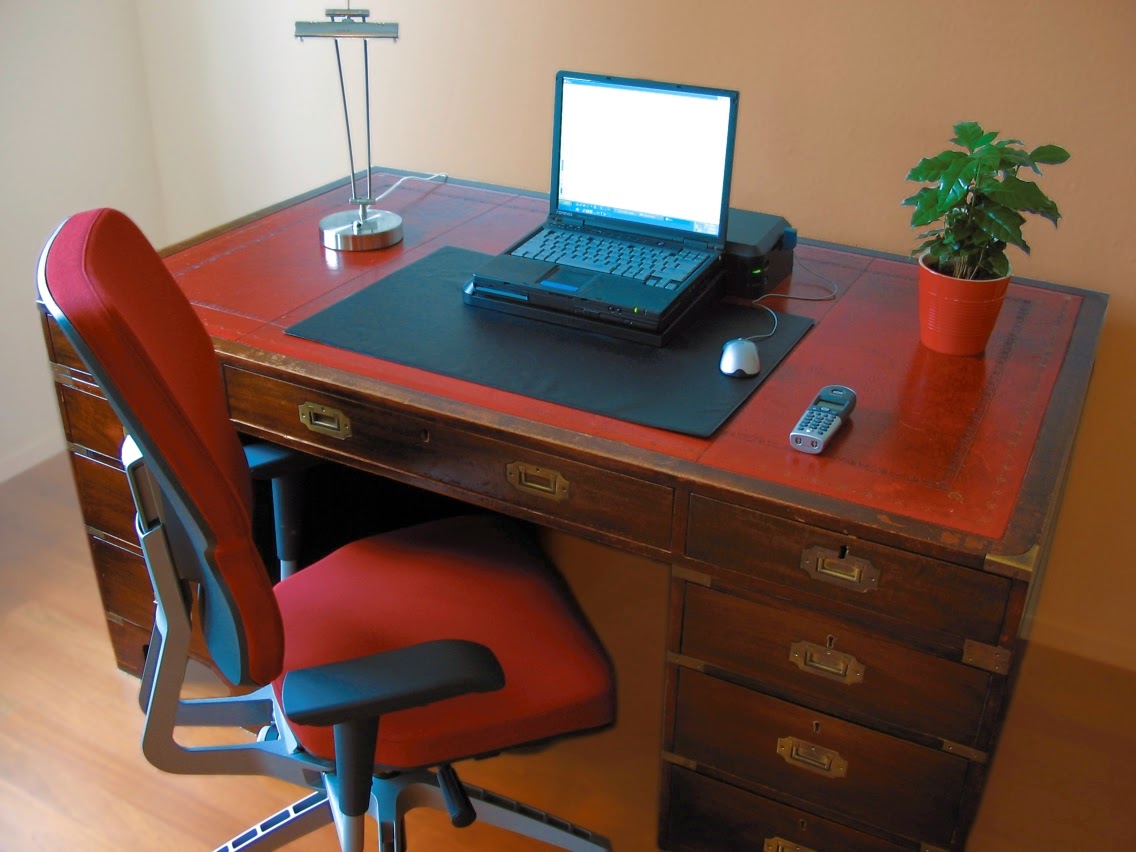
Most Homeowner’s policies do not automatically cover any business property or liability at all. However, most Homeowner’s policies give you the option to endorse your policy to cover an in-home business exposure. Typically, that endorsement will extend coverage from your Homeowner’s policy to cover incidental business liability and cover your business personal property as well. However, this endorsement is typically reserved for in-home offices only. An example would be if you had a company computer at home that could connect to your company’s server and allow you to work from home—making calls, fill out reports, etc. 

Typically, things get more complicated if the entire business is ran in-home. Businesses such as the aforementioned daycare and pet grooming probably wouldn’t be able to be covered by your Homeowner’s policy. This is because the entire operation is based from the home, instead of being an incidental exposure. Also, there are extra coverages that those types of businesses would need (E.g. business income, animal bailee coverage, molestation and misconduct coverage) that are not even offered for homeowners.

In-home businesses are becoming more common, and the risks are becoming more complicated. If you think you may have any in-home business exposure, make sure to contact your insurance agent and have a discussion about the specific risks of your situation and your insurance options!    

Note from the Author (Nov. 14, 2014): After two years of work, we've entirely redesigned our website! Using SquareSpace, we were able to import this blog and we are continuing our blog there. To find the current version of this article and our new articles, click HERE.

April 29, 2014

Flood, Mudslide, and Earthquake Exclusions—What You Don’t Know Can Hurt You

Why aren't these perils covered in a standard (unendorsed) Homeowner’s/Renter's policy? How can I get these covered? Do I really need to have these perils covered?

Thousands of homeowners are surprised each year by flooding, and some of them are even more surprised when their insurer denies their claim! Similar scenarios happen for both earthquakes and mudslides, too. What many homeowners don’t realize is that their standard Homeowner’s/Renter's policies do not cover these perils!

The reason these perils aren’t covered is because they are typically part of catastrophes, and catastrophes are often hard to cover by a non-government entity. The typical insurer simply doesn’t have the financial capability to insure everyone in a flood zone. That’s why programs such as the National Flood Insurance Program (NFIP) were made. So there are certain parts of the U.S. that are drastically susceptible to floods, mudslides or earthquakes, and those places are where government programs really come in. The rest of the United States is in low to medium risk zones, which can often be insured by private insurers--but only by endorsement! Remember that no standard form of the Homeowner’s or Renter's policies will cover any of these perils!

So if you’ve gone this long without these coverages, do you really need to insure them now? Flood maps and fault maps are available online, and for those in Nebraska, we have a low to moderate risk of flood, mudslide, and earthquakes (the fault that runs through Nebraska hasn’t been disastrously active--yet). Coverage for these perils usually don’t cost too much to cover, and might keep you from having a claim denied some day.

A note about flood insurance: covering your home for the peril of flooding is a broader coverage than you might think. It doesn’t have to be a river, pond, or lake overfilling to cause a flood. Public sewers backing up, water tables rising and causing seepage through your walls, and more are covered by a flood policy—and would otherwise be excluded.

Extras:
  • You can find a seismic risk map HERE and other earthquake information. 
    • As a FYI, a 2.9 magnitude earthquake just happened back on January 5th, 2014 from south Lincoln down to Manhattan, Kansas (100 miles west of Kansas City).
  • You can find more flood information HERE.
   Note from the Author (Nov. 14, 2014): After two years of work, we've entirely redesigned our website! Using SquareSpace, we were able to import this blog and we are continuing our blog there. To find the current version of this article and our new articles, click HERE.

March 25, 2014

Introduction to Sump Pumps

Diagram provided by sump-pumps-online.com
What is a Sump Pump? Where can it be found? Do I need a Sump Pump? How do Sump Pumps relate to insurance?

A Sump Pump gets rid of the water that collects around your basement’s walls. It is needed because water pressure on your basement walls can lead to big problems. The water to be Sump-Pumped is collected by perforated piping that runs around the outside edges of your basement. The water is sent to the Sump Pit, which is a basin for the water to accumulate in. The Sump Pump will be found in the Sump Pit, and will most likely be found in the unfinished part of your basement. When the water level in the Sump Pit reaches a certain point, the Sump Pump will automatically turn on and pump the water through another pipe that will displace the water properly.

In Nebraska, not all homes will have the need for a Sump Pump. Those that do, have one for one or a combination of the following reasons:
  • The water table below your home is high enough to reach your basement when it rains
  • Your home was built in a valley/in a flood-prone area
  • The land is improperly graded away from your house
  • Your decks, patios, driveway, etc. is improperly graded away from your house
  • Your gutters are not adequate/are malfunctioning
These scenarios allow for water accumulation along the sides of your basement, which will eventually lead to seepage, with a possibility of collapsing the basement wall(s) entirely. Seepage alone creates issues of mold and mildew, and will ruin your insulation and drywall.

If your home is built on top of a hill, has properly graded land, pavement, decks, etc. and has properly functioning gutters, you may have no need for a Sump Pump. However, for those who do have one, most insurance companies offer a Sump Pump coverage endorsement that will protect you if your Sump Pump were to fail. Some of these endorsements include coverage for collapse because of a malfunctioning Sump Pump as well. Note that no Homeowner’s insurance policy comes with Sump Pump coverage as a standard coverage.

Note from the Author (Nov. 14, 2014): After two years of work, we've entirely redesigned our website! Using SquareSpace, we were able to import this blog and we are continuing our blog there. To find the current version of this article and our new articles, click HERE.

March 11, 2014

Riders & Endorsements: Modifying Your Coverage

Two insurance-jargon staples for Homeowner's insurance are Endorsements and Riders, but what do they mean? What does it mean to have a ‘standard’ or ‘non-Endorsed’ policy? What does an 'Endorsed' policy mean?

The ‘standard’ or ‘non-Endorsed’ Homeowner’s policy is the basic, unchanged Homeowner’s policy. This ‘standard’ policy generally is set by the Insurance Services Office (ISO) who makes template policy language for all types of insurance (Homeowner’s, Auto, Commercial, etc). These template policies are then used by actual insurance companies. Some companies use them verbatim, while other companies add or subtract things to change the ‘base’ coverage. However, there are some things that are never included in the ‘base’ form, such as water damages and earthquakes. These and other perils can be insured by separate policies or policy Riders/Endorsements.

Endorsements and Riders are related insurance terms, as both change your standard policy. The difference is that a Rider typically refers to an added coverage to your policy, while an endorsement can be made to add or subtract coverage, or just to change an address or add/subtract a mortgage holder. Either way, if a policy has been changed from its original form, it will then be referred to as an 'Endorsed' policy, and if your policy is referred to as an ‘Endorsed' policy, that typically means that it has added coverages that the ‘base’ policy doesn’t have. An example could be a policy that has Sump Pump Backup coverage added to it. In this case, the Sump Pump Backup coverage would be an example of a Rider, but the policy would be referred to as an 'Endorsed' policy. 

Note from the Author (Nov. 14, 2014): After two years of work, we've entirely redesigned our website! Using SquareSpace, we were able to import this blog and we are continuing our blog there. To find the current version of this article and our new articles, click HERE.