Showing posts with label Homeowner's. Show all posts

October 9, 2014

Preparing for Winter: A Homeowner's Guide

The leaves are starting to fall, the days are getting shorter, and Husker Football is in full swing. Just around the corner is winter, and with it brings many possible headaches for homeowners. This article will give a list of items to do to prepare the exterior of your home for the winter.

The autumn chill has set upon Nebraska, whether we like it or not. The months ahead will only get colder, and with Nebraska weather you never quite know what to expect. Though there are some things you just can’t avoid (thus your Homeowner’s policy), there are a few maintenance items that you can do to help keep your home claim-free this winter:

  • Start out with a visual inspection of your roof. If it’s a pitched roof, make sure there aren't any missing shingles or tiles. Also make sure to check for warping and worn-out shingles. For those with flat roofs, make sure bubbles haven't formed, and make sure that the gravel is thoroughly covering the membrane. Have any problems fixed.
  • Next, inspect the flashing. The flashing is the covering where your roof changes from sloped to vertical (or horizontal to vertical).  It can also be found around skylights, vents, and chimneys. Worn out flashing is a great place for water to slip underneath, causing big headaches later on. Make sure to have any damaged or worn out flashing replaced.
  • While still on the roof, make sure all of the gutters and downspouts are clean. Leaves, dirt, and shingle bits can clog them (parents, you might find some missing toys while you're at it!). Clogged gutters will trap water, and when it freezes, all sorts of problems can happen.
  • Now make your way off the roof to inspect the premise. Make note of any trees with dead branches or branches that hang over your home. Make sure to have these types of branches trimmed, as the weight of snow and ice along with high winds could make them fall, damaging your roof or hurting someone walking underneath them.
  • If you found large problems with your roof and it needs to be replaced, now is the time to consider upgraded hail-proof roofing products. Many insurers will provide a discount for new roofs, and most offer an additional discount for hail-proofing.
Nobody likes claims, so take an afternoon to check over the exterior of your home. Catching a small problem before it turns into a big one could save you a lot of time and money! 

Note from the Author (Nov. 14, 2014): After two years of work, we've entirely redesigned our website! Using SquareSpace, we were able to import this blog and we are continuing our blog there. To find the current version of this article and our new articles, click HERE.

June 23, 2014

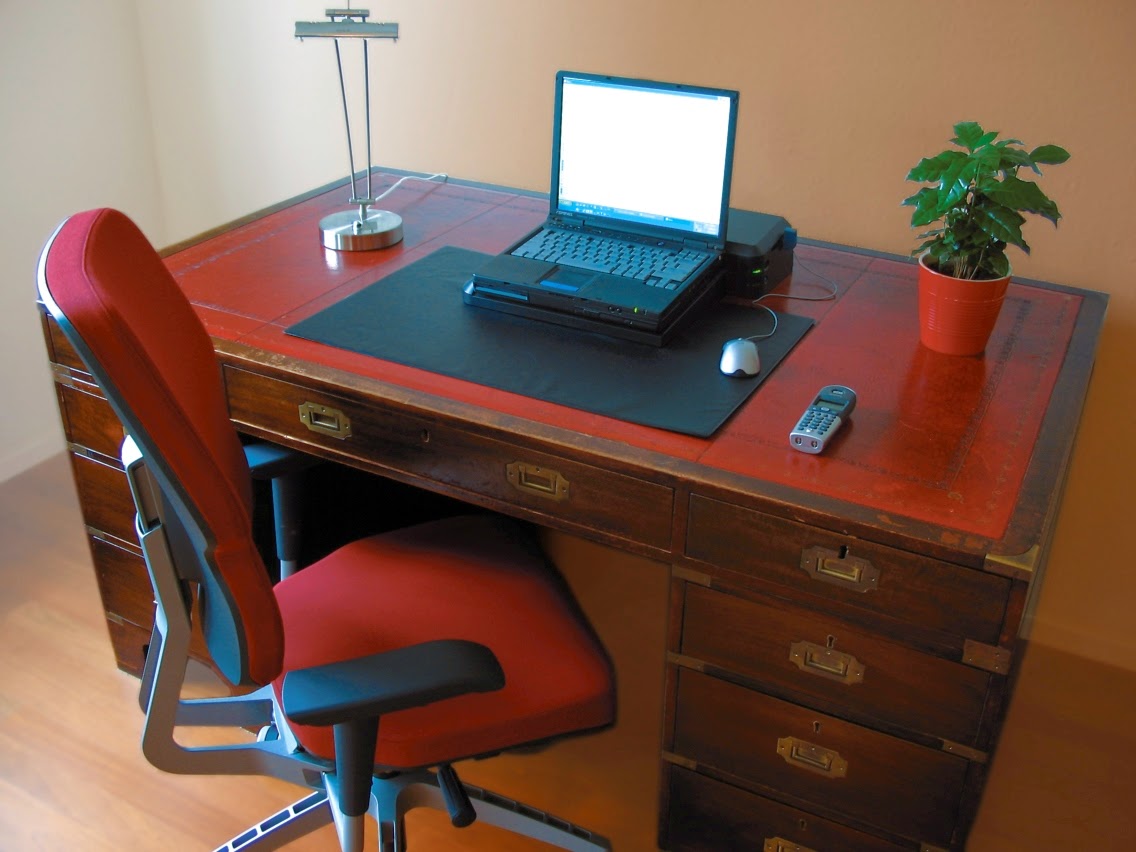
In-Home Business Exposures

Aided by technology, many people have started working from home. However, the Homeowner’s policy doesn’t cover business activities, so where can you get coverage? When can an endorsement be made to your Homeowner’s coverage to add the coverage? When can’t coverage be endorsed to your Homeowner’s policy?

In-home businesses are becoming a common occurrence, thanks to technology. With the ability to videoconference with anyone at anytime over the internet, the business world has become a smaller place—and is allowing more people to work from home. Some people can connect to their company's servers and work from home. Others use the new technology to sell their wares online, using their home as there head office and/or warehouse. And still others run non-internet based operations, such as daycares and pet grooming. So when does a home business require an endorsement to the Homeowner's policy, and when does it require a separate commercial policy?

Most Homeowner’s policies do not automatically cover any business property or liability at all. However, most Homeowner’s policies give you the option to endorse your policy to cover an in-home business exposure. Typically, that endorsement will extend coverage from your Homeowner’s policy to cover incidental business liability and cover your business personal property as well. However, this endorsement is typically reserved for in-home offices only. An example would be if you had a company computer at home that could connect to your company’s server and allow you to work from home—making calls, fill out reports, etc. 

Typically, things get more complicated if the entire business is ran in-home. Businesses such as the aforementioned daycare and pet grooming probably wouldn’t be able to be covered by your Homeowner’s policy. This is because the entire operation is based from the home, instead of being an incidental exposure. Also, there are extra coverages that those types of businesses would need (E.g. business income, animal bailee coverage, molestation and misconduct coverage) that are not even offered for homeowners.

In-home businesses are becoming more common, and the risks are becoming more complicated. If you think you may have any in-home business exposure, make sure to contact your insurance agent and have a discussion about the specific risks of your situation and your insurance options!    

Note from the Author (Nov. 14, 2014): After two years of work, we've entirely redesigned our website! Using SquareSpace, we were able to import this blog and we are continuing our blog there. To find the current version of this article and our new articles, click HERE.
June 10, 2014

Keeping an Inventory

When insuring property, commercial or personal, it can be highly beneficial to create an inventory of all your items. There are many advantages to keeping a schedule of your items, and taking inventory can be aided by technology.

Homeowners, Condo-owners, Renters, and businesses all have something in common—they have a lot of stuff! Now, the items may be a bit different for each, but the need to schedule these items is vital for all of them.

Why should I make a list of my possessions?
  • Making a list of your items will help determine the amount of personal property coverage to initially obtain
  • In a claim, an inventory can speed up the claims process, getting you paid sooner
  • In a claim, an inventory will ensure you get completely and accurately reimbursed for your loss
  • After a catastrophe, you will need to quantify your losses to qualify for tax breaks or disaster assistance.

So how do I do it?

Though it may seem overwhelming to keep track of all the items you have, know that even a partial list is better than no list as all, and the list can be organized however you see fit. You could organize it by highest cost item to lowest, by room, by most recent purchase, by item type, or any way you find intuitive.

Taking inventory can also be aided by technology. Apps such as the Insurance Information Institute’s ‘Know Your Stuff’ app allows you to write down the item location, category of item, item name, item’s make, and the item’s model. It also allows you to take a picture of each item. The information is then synced to their website where you can easily access it from anywhere with an internet connection, keeping it safely stored online.

If you decide to make a list by hand or in a spreadsheet, make sure to save a copy of it outside of the home, perhaps at work, a family member’s house, or a copy saved to a Cloud database. Also, you may find it beneficial to store other important information with your inventory list. Some useful information to save would be a copy of you and your family’s legal documents, financial records, passwords, and PINs for bank accounts.

Creating a list of your items can seem to be a very daunting task. Maintaining it will be an ongoing process as well, but remember that a partial list is better than no list at all, and that keeping a list will make sure you get the full use out of the insurance coverage you bought!

Note from the Author (Nov. 14, 2014): After two years of work, we've entirely redesigned our website! Using SquareSpace, we were able to import this blog and we are continuing our blog there. To find the current version of this article and our new articles, click HERE.

March 25, 2014

Introduction to Sump Pumps

Diagram provided by sump-pumps-online.com
What is a Sump Pump? Where can it be found? Do I need a Sump Pump? How do Sump Pumps relate to insurance?

A Sump Pump gets rid of the water that collects around your basement’s walls. It is needed because water pressure on your basement walls can lead to big problems. The water to be Sump-Pumped is collected by perforated piping that runs around the outside edges of your basement. The water is sent to the Sump Pit, which is a basin for the water to accumulate in. The Sump Pump will be found in the Sump Pit, and will most likely be found in the unfinished part of your basement. When the water level in the Sump Pit reaches a certain point, the Sump Pump will automatically turn on and pump the water through another pipe that will displace the water properly.

In Nebraska, not all homes will have the need for a Sump Pump. Those that do, have one for one or a combination of the following reasons:
  • The water table below your home is high enough to reach your basement when it rains
  • Your home was built in a valley/in a flood-prone area
  • The land is improperly graded away from your house
  • Your decks, patios, driveway, etc. is improperly graded away from your house
  • Your gutters are not adequate/are malfunctioning
These scenarios allow for water accumulation along the sides of your basement, which will eventually lead to seepage, with a possibility of collapsing the basement wall(s) entirely. Seepage alone creates issues of mold and mildew, and will ruin your insulation and drywall.

If your home is built on top of a hill, has properly graded land, pavement, decks, etc. and has properly functioning gutters, you may have no need for a Sump Pump. However, for those who do have one, most insurance companies offer a Sump Pump coverage endorsement that will protect you if your Sump Pump were to fail. Some of these endorsements include coverage for collapse because of a malfunctioning Sump Pump as well. Note that no Homeowner’s insurance policy comes with Sump Pump coverage as a standard coverage.

Note from the Author (Nov. 14, 2014): After two years of work, we've entirely redesigned our website! Using SquareSpace, we were able to import this blog and we are continuing our blog there. To find the current version of this article and our new articles, click HERE.

March 11, 2014

Riders & Endorsements: Modifying Your Coverage

Two insurance-jargon staples for Homeowner's insurance are Endorsements and Riders, but what do they mean? What does it mean to have a ‘standard’ or ‘non-Endorsed’ policy? What does an 'Endorsed' policy mean?

The ‘standard’ or ‘non-Endorsed’ Homeowner’s policy is the basic, unchanged Homeowner’s policy. This ‘standard’ policy generally is set by the Insurance Services Office (ISO) who makes template policy language for all types of insurance (Homeowner’s, Auto, Commercial, etc). These template policies are then used by actual insurance companies. Some companies use them verbatim, while other companies add or subtract things to change the ‘base’ coverage. However, there are some things that are never included in the ‘base’ form, such as water damages and earthquakes. These and other perils can be insured by separate policies or policy Riders/Endorsements.

Endorsements and Riders are related insurance terms, as both change your standard policy. The difference is that a Rider typically refers to an added coverage to your policy, while an endorsement can be made to add or subtract coverage, or just to change an address or add/subtract a mortgage holder. Either way, if a policy has been changed from its original form, it will then be referred to as an 'Endorsed' policy, and if your policy is referred to as an ‘Endorsed' policy, that typically means that it has added coverages that the ‘base’ policy doesn’t have. An example could be a policy that has Sump Pump Backup coverage added to it. In this case, the Sump Pump Backup coverage would be an example of a Rider, but the policy would be referred to as an 'Endorsed' policy. 

Note from the Author (Nov. 14, 2014): After two years of work, we've entirely redesigned our website! Using SquareSpace, we were able to import this blog and we are continuing our blog there. To find the current version of this article and our new articles, click HERE.